The good news is that the FCA hasn’t banned anything. Its 2024 guidance on financial promotions on social media (FG24/1) explains how the existing rules apply to posts, comments, reshares and video. Once you know where the lines sit, most of what advisers want to post falls comfortably on the right side of them.
Start with one question
The FCA’s test is straightforward: Anything you post can be a financial promotion if it invites or encourages someone to engage in investment activity and you’re posting in the course of business. The format makes no difference. A meme or a twenty-second video counts just as much as a long post.
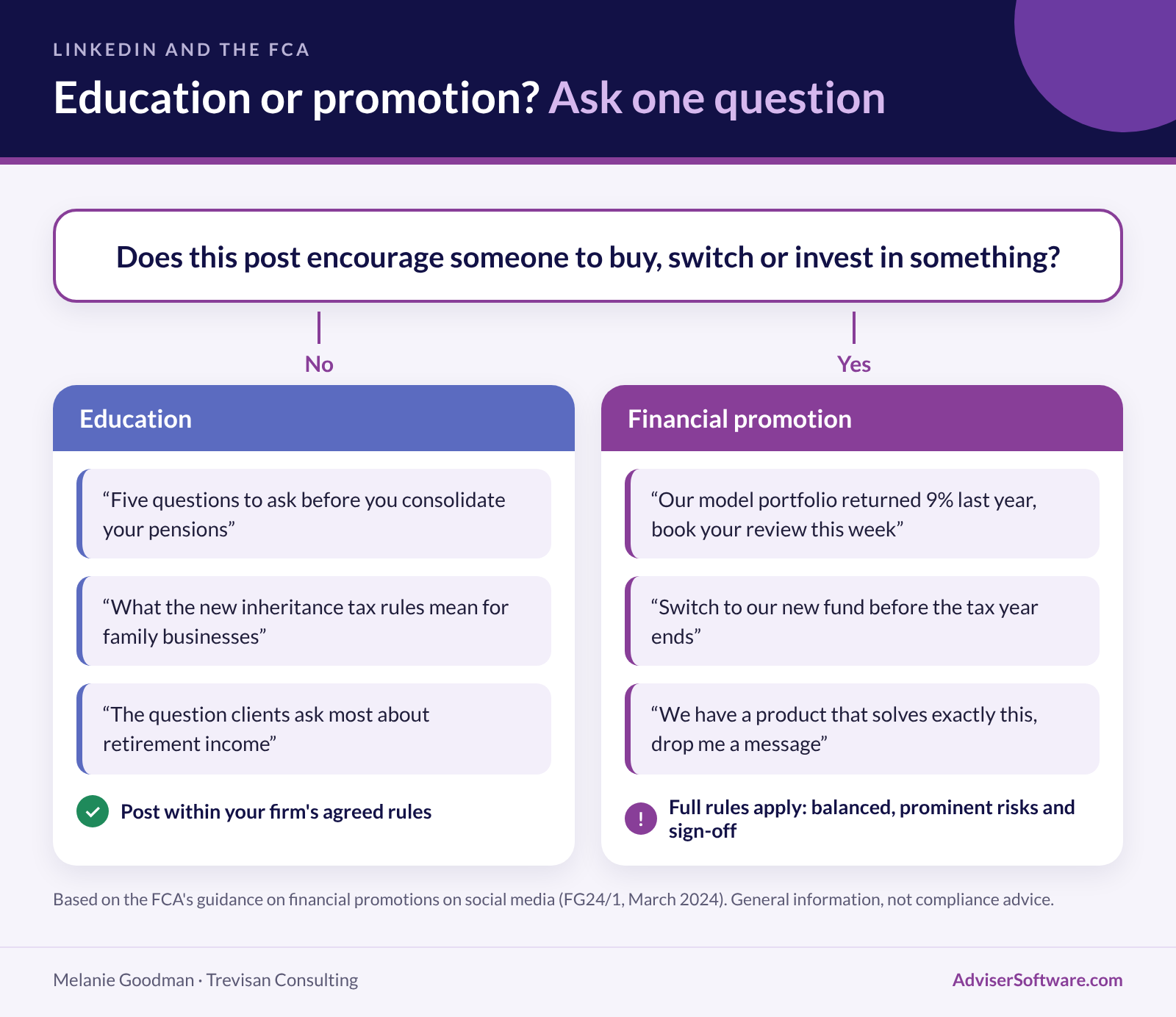
Before you press “post”, ask yourself one thing: does this encourage someone to buy, switch or invest in something?
- “Five questions to ask before you consolidate your pensions” is education.
- “Our model portfolio returned 9% last year, book your review this week” is a promotion, and the full rules apply.
Most of what builds an adviser’s reputation on LinkedIn sits in the first group, such as explaining a rule change or answering the question every client asks. The trouble starts when a post drifts into the second group and nobody notices.
Where firms most often get it wrong
1. The risks are somewhere else
You know when you sign up to an app and somewhere at the very bottom in tiny writing it says to cancel within 7 days so that you don’t get charged a monthly subscription. Who ever reads that far? Not most of us. That’s what online retailers rely on. You cannot do the same on socials!
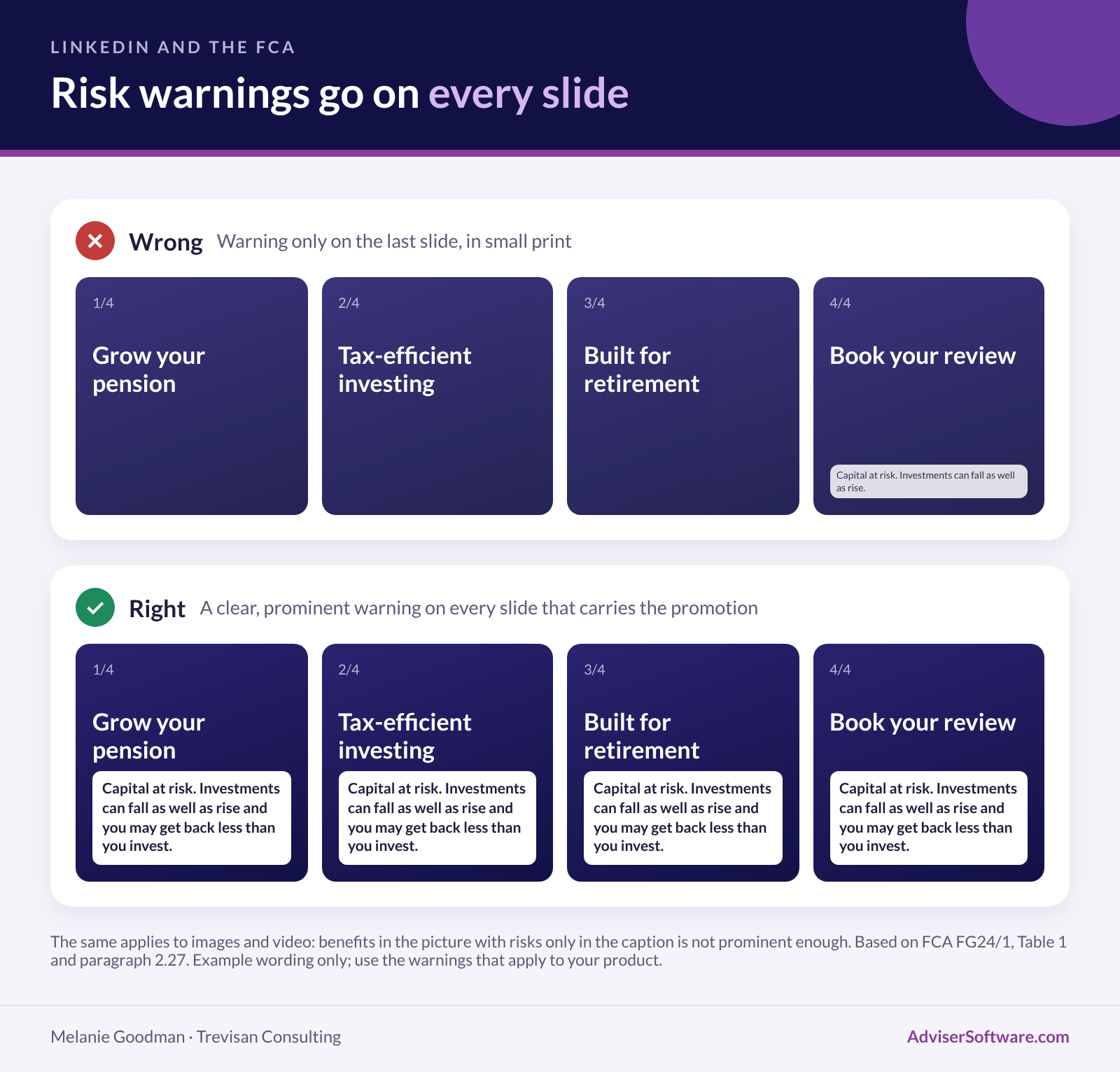
Putting the benefits in an image or video and the risks only in the caption is the classic mistake. The FCA’s view is that the risks haven’t been given enough prominence. LinkedIn carousels and document posts work the same way. If a promotion runs across several slides, any required risk warning goes on every slide that carries it. Saving it for the last slide doesn’t count.
2. Trusting “see more”
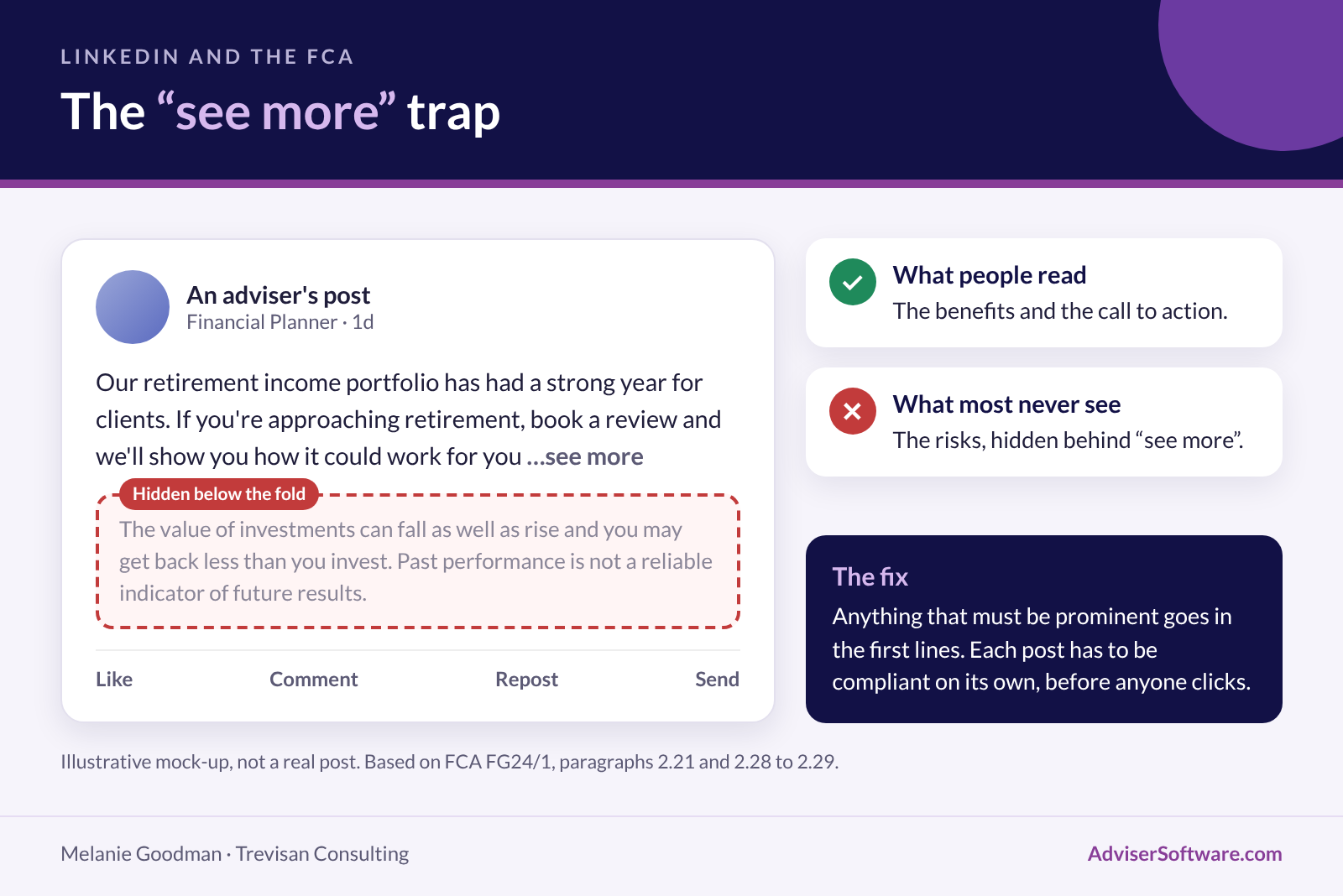
LinkedIn hides everything after the first few lines of a post. Anything that has to be prominent needs to be visible before someone clicks and every post has to stand on its own. A link to a fuller explanation can add detail but it can’t rescue a post that misleads in the feed.
3. Thinking a reshare is someone else’s problem
When you reshare a provider’s or platform’s post, you take on responsibility for it. The guidance is clear that sharing doesn’t fix a non-compliant original and that sharing can create a fresh problem, for example when content meant for professional investors lands in front of retail clients. My rule of thumb is simple: if you wouldn’t publish it under your own name, don’t reshare it!
4. Forgetting the comments
Comments are where good intentions come unstuck. You write a careful, balanced post about inheritance tax planning. Someone asks a question underneath, and the reply says “we have a product that solves exactly this, drop me a message”. That reply is a promotion. Make sure everyone who comments on the firm’s behalf knows where the line is.
5. Assuming a personal profile is private
The FCA’s guidance doesn’t deal with employees’ own profiles directly. Its business test, though, asks whether the person posting has a commercial interest and an adviser talking about their firm’s services to a network of clients and prospects clearly does. My view, as a lawyer, is that firms should treat posts about their services from an adviser’s profile exactly as they treat posts from the company page.
The Consumer Duty applies as well
FG24/1 confirms that the Consumer Duty covers promotions on social media, including those reaching people you have no relationship with yet. Fair, clear and not misleading is the minimum, and the Duty asks more of you. In practice that means plain English written for the people you actually want to reach, and none of the pressure tactics, such as false urgency or posting the same promotion again and again until people give in.
Making it workable
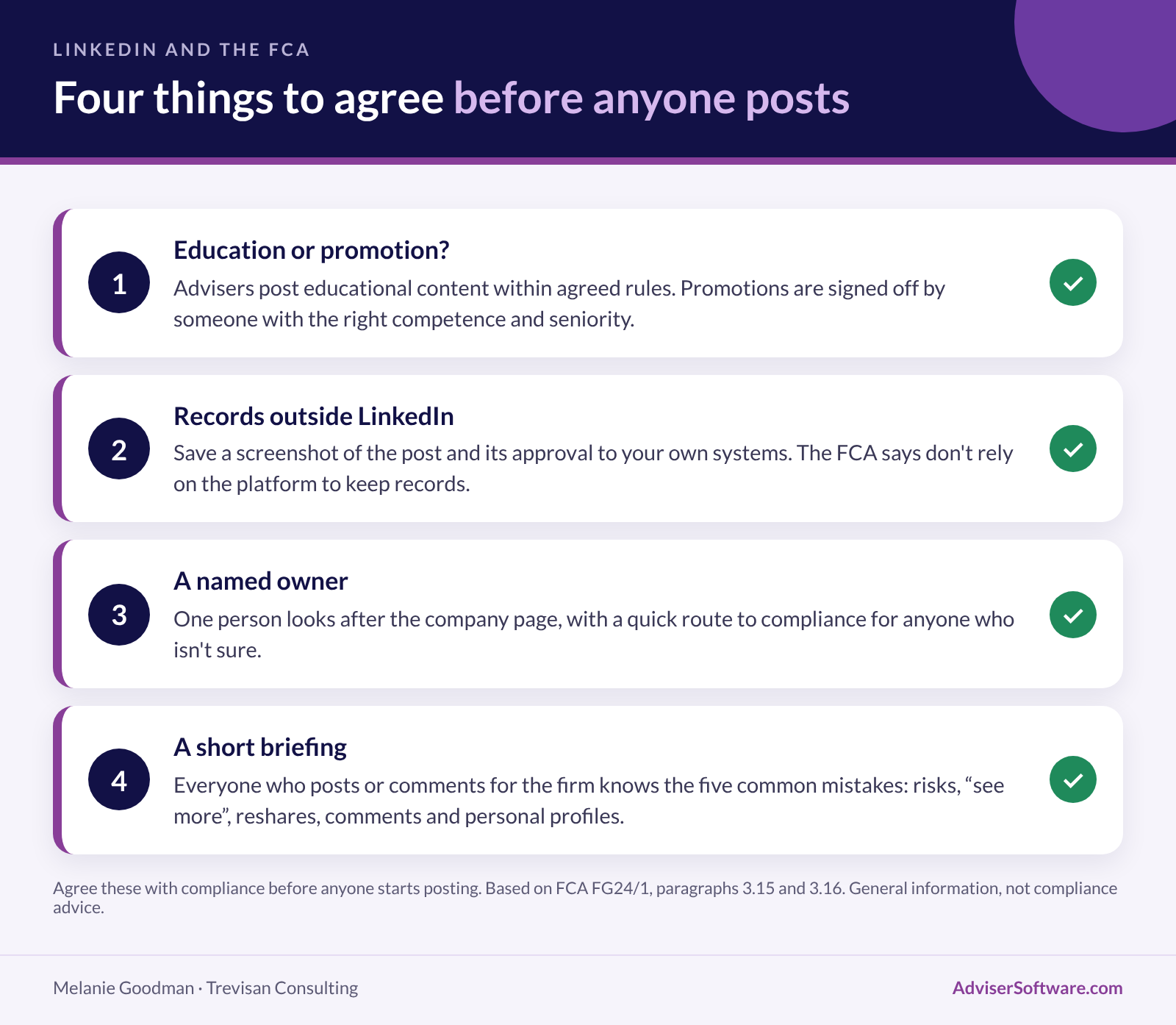
You don’t need a sign-off process so slow that nobody bothers posting but you do need a few items agreed before anyone starts:
- A clear split between educational posts, which advisers can publish within agreed rules, and promotional posts, which are signed off by someone with the right competence and seniority.
- Records kept outside LinkedIn. In the FCA’s words, firms “should not rely on digital media channels to maintain records”. A screenshot and the approval, saved to your own systems, is a sensible minimum.
- A named owner for the company page, plus a quick route to compliance for anyone who isn’t sure.
- A short briefing for everyone who posts or comments for the firm, covering the five points above.
Later in this series I’ll look at what goes into a workable social media policy and how to put one into practice.
In the meantime, what’s the one thing that stops you posting more often?