The same question applies to LinkedIn, yet most firms haven’t asked it yet. Your advisers, paraplanners and administrators are already on LinkedIn. Every time they mention the firm, comment on a client’s post or reshare something from a provider, they’re representing you, whether you have a policy or not.
Why saying nothing carries its own risk
Without clear guidance, staff tend to fall into two groups. A few post freely and occasionally stray into territory that would worry your compliance team. Most say nothing at all, because nobody has told them what’s allowed.
The second group is the higher cost. Clients and introducers look people up before they meet them, and a team that stays silent online looks like a firm with nothing to say. You also lose the reach that comes from your people’s own networks, which are usually far larger than your company page’s following.
A good social media policy fixes both problems. It tells people where the lines are, so the confident ones stay inside them and the hesitant ones have permission to start.
Where most policies go wrong
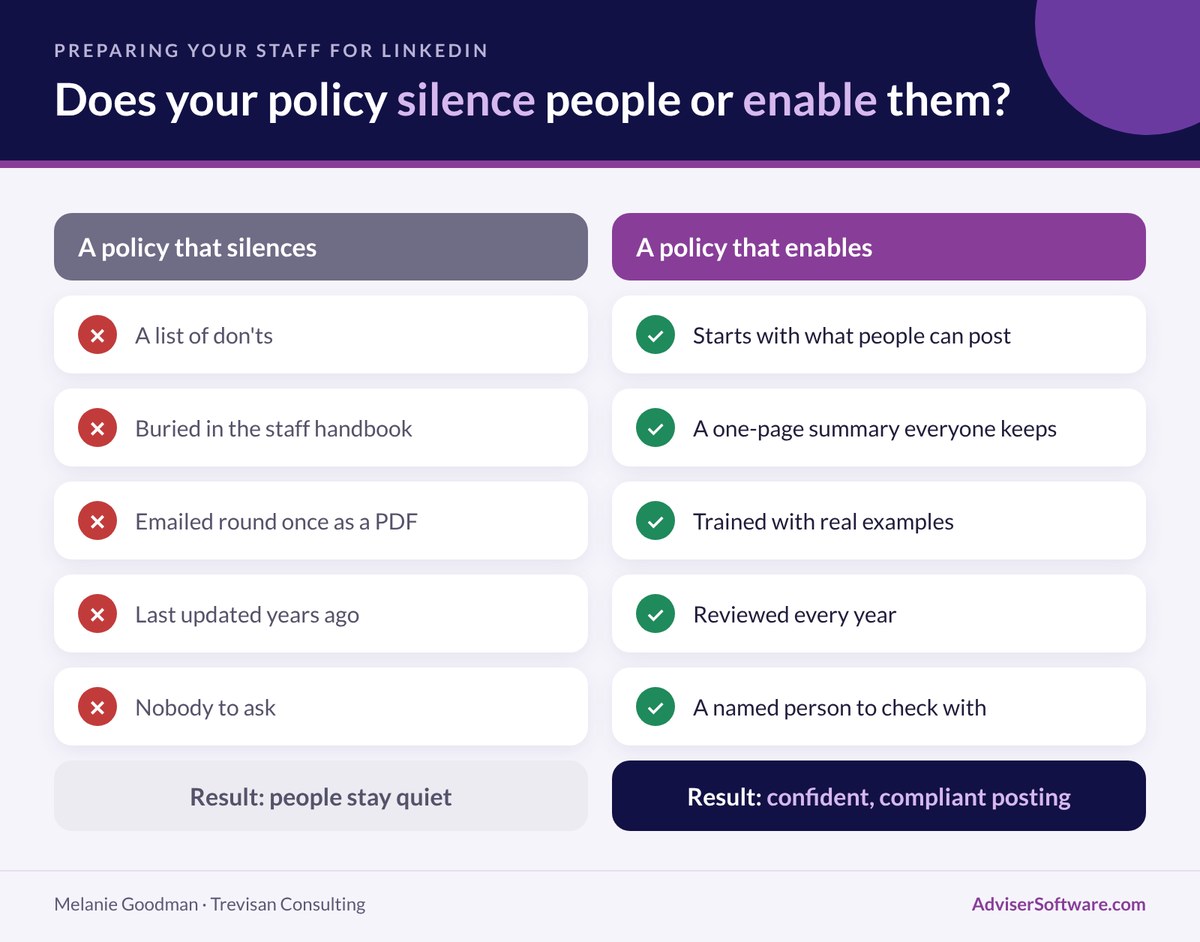
Plenty of firms already have a social media policy. They give it to new joiners on their first day, along with an IT guide and fire drill instructions which get shoved in a desk drawer, never to be looked at again 😉 Ask staff what’s in it and you’ll often get a blank look.
The usual problems are easy to spot. The policy is a list of things people mustn’t do. It sits in the staff handbook and was last updated before anyone in the firm had heard of a LinkedIn newsletter. Nobody was ever trained on it, so people read it, if at all, as “best not post”.
A policy that only says no produces silence. A policy that explains what good looks like produces confident, compliant posting.
What a workable policy covers
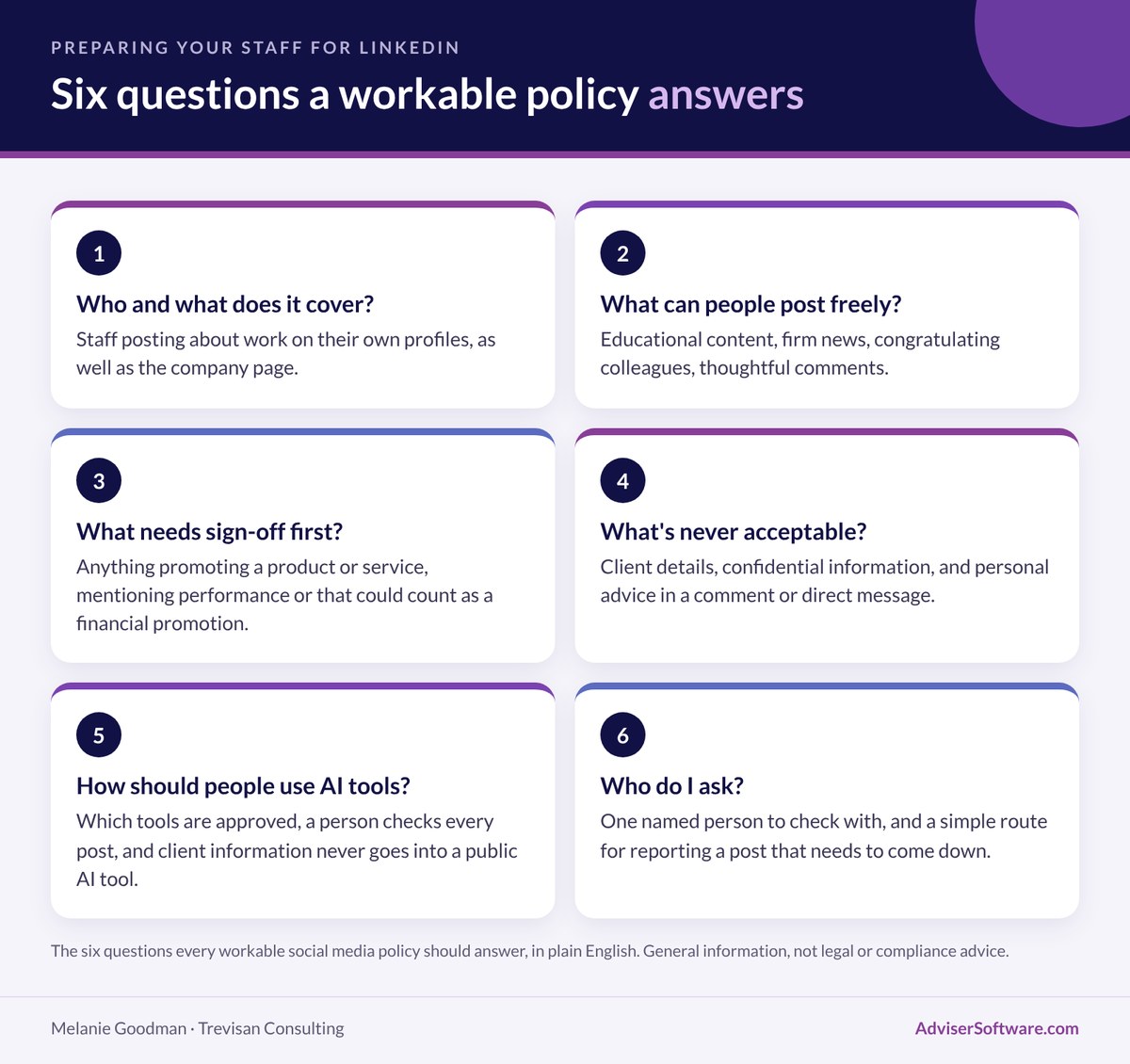
Every firm’s policy will look different, but a workable one answers six questions in plain English.
- Who and what does it cover? Staff posting about work on their own profiles, as well as the company page.
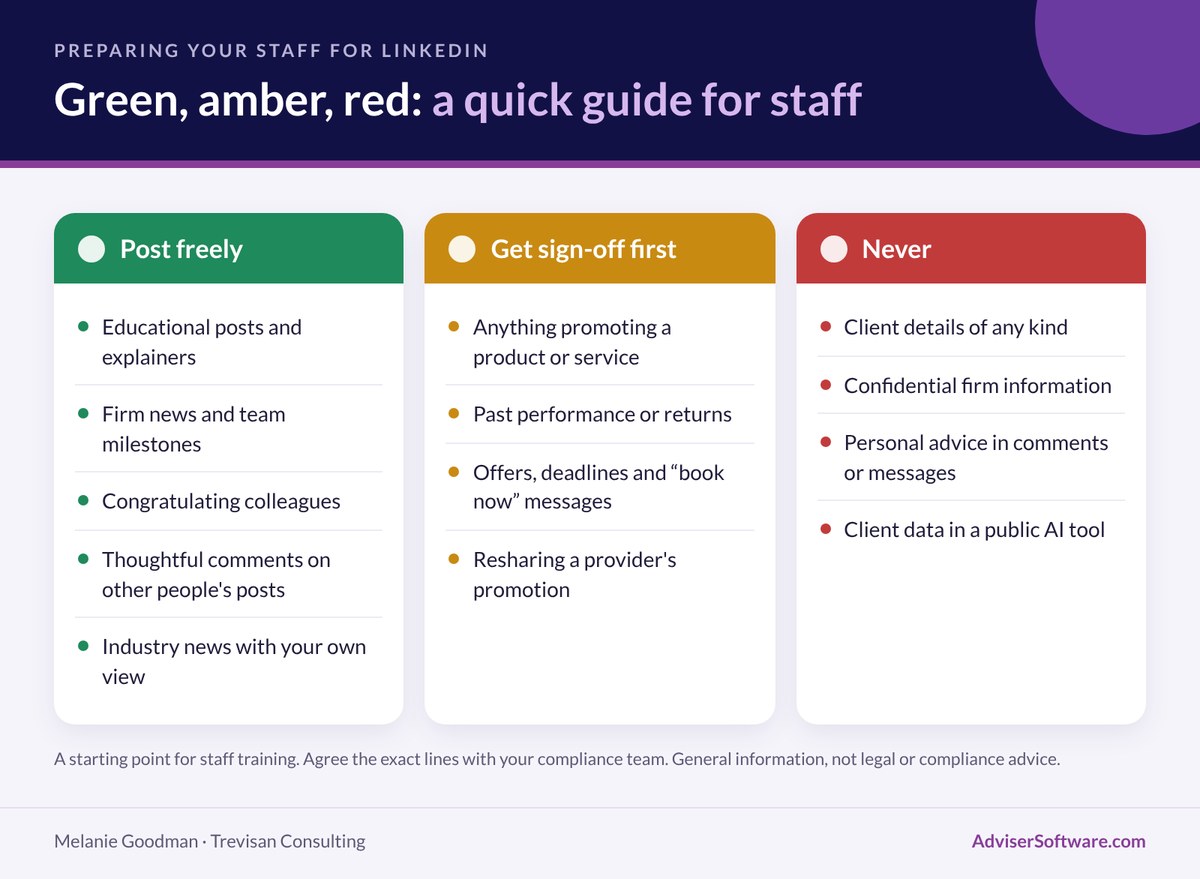
- What can people post freely? Educational content, firm news, congratulating colleagues and thoughtful comments on other people’s posts.
- What needs sign-off first? Anything that promotes a product or service, mentions performance or could count as a financial promotion. I covered how the FCA sees this in my last article.
- What’s never acceptable? Client details of any kind, confidential information, and personal advice given to an individual in a comment or direct message.
- How should people use AI tools? AI is a brilliant drafting partner for LinkedIn posts. Your policy should say which tools staff can use, that a person checks every post before it goes out, and that client information never goes into a public AI tool.
- Who do I ask, and what if something goes wrong? One named person to check with, and a simple route for reporting a post that needs to come down.
Train it, don’t just send it
The difference between a policy that works and one that gathers dust is training. Emailing a PDF round the office doesn’t count.
A short session works well. Walk through real examples of good and bad posts, then give people a few scenarios to discuss. A client comments on your post asking about their pension. A provider sends you a post to reshare. You want to use AI to turn a client seminar into a LinkedIn post. What do you do?
Start with a confidence check
If you’re not sure where your firm stands, ask your team three questions this week:
- Do you know what you’re allowed to post about the firm?
- Would you know who to ask if you weren’t sure?
- Have you ever decided not to post something because you didn’t know the rules?
If the answers vary, or the last one gets a lot of nods, you have your answer.
The same thinking you’re already applying to AI
Firms preparing their people for AI are already doing the hard part. They’re agreeing principles, training staff and putting sensible safeguards in place. LinkedIn needs exactly the same treatment, and it’s a much smaller job.
In my next article, I’ll look at the practical side of running a policy day-to-day: who signs off what, how to keep records, and what happens to LinkedIn connections and client conversations when someone leaves.
In the meantime, how confident are your team about what they can post?